What Makes a Family Memoir Work
A strong family memoir has two jobs: preserve real memories and give readers a reason to keep turning pages. That means you do not need every date, cousin, address, or holiday. You need scenes, patterns, voices, and meaning.
For example, a memoir about childhood summers at your grandmother’s house might include the screen door, the smell of tomatoes in the garden, the cousin who always started trouble, and the quiet rules everyone followed at dinner. Those details often say more than a timeline ever could.
1. Choose the Scope of the Memoir
Start by deciding what this memoir is really about. “Our family history” is usually too broad. Try one of these narrower frames:
- A childhood memoir about growing up in one town, home, or era
- A parent’s or grandparent’s life story told through key chapters
- A family memoir centered on migration, work, hardship, or resilience
- A collection of linked stories around holidays, food, music, or traditions
- A legacy memoir written for children and grandchildren
If you are writing for private family use, you can be more intimate and include inside references. If you want a memoir book for wider readers, you will need more context, cleaner structure, and fewer unexplained names.
2. Create a Project and Gather Your Raw Material
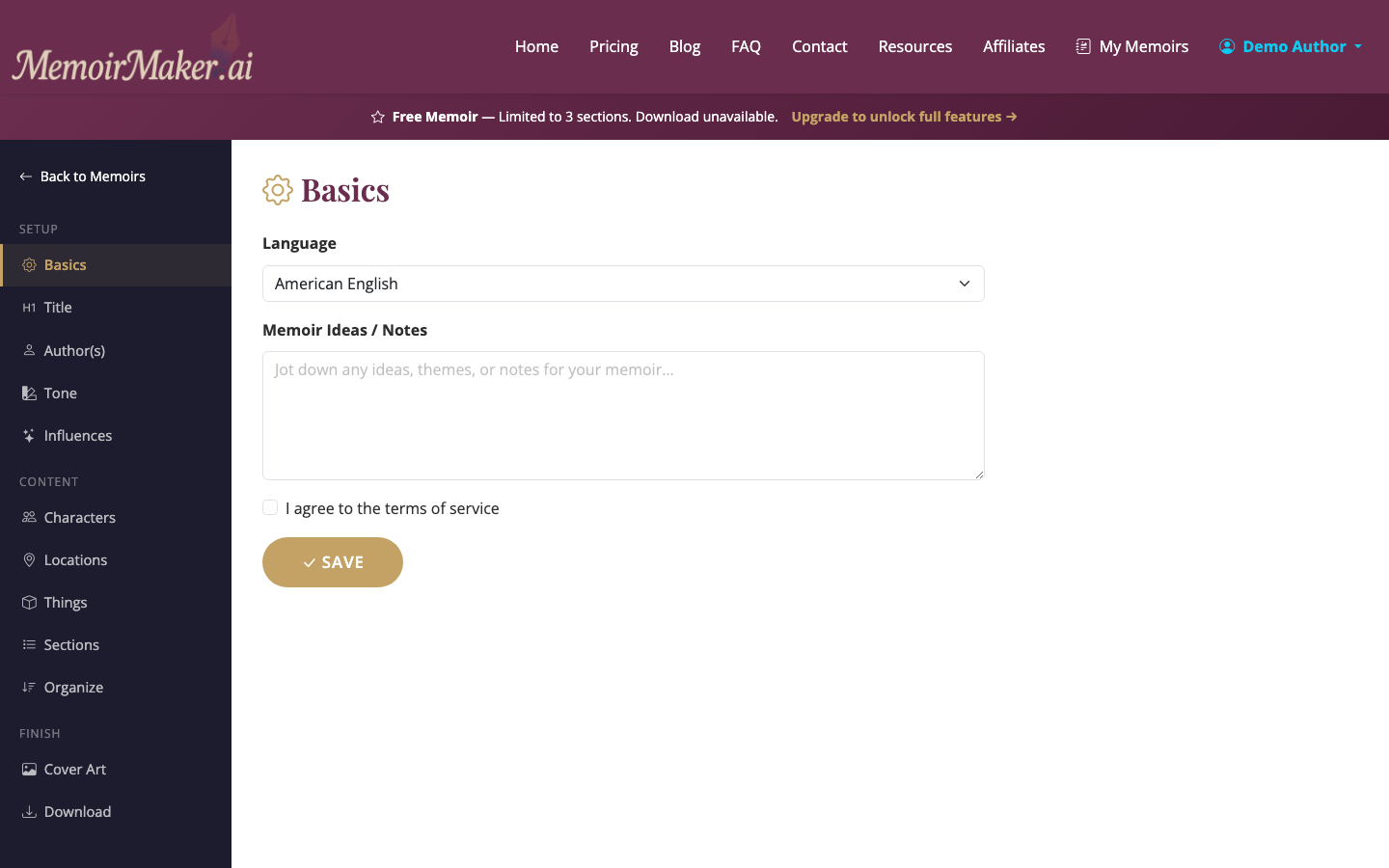
Open your memoir workspace and create a new project for the family or childhood memoir. Give it a working title. It does not need to be final; something like “Mom’s Childhood Stories” or “The Martinez Family Memoir” is enough.

Before drafting, gather source material in one place:
- Voice notes from the person whose memories are central
- Old photos, letters, recipes, certificates, and newspaper clippings
- A rough family tree or list of recurring people
- Place names, street names, schools, churches, workplaces, and towns
- A short list of stories family members always retell
MemoirMaker.ai works well when you have fragments rather than finished prose. You can speak memories into the mic, type rough notes, or combine both.
3. Build a Simple Chapter Outline
For a family memoir, chronological order is often the easiest structure. For a childhood memoir, a theme-based structure can work better because childhood memories rarely arrive in perfect order.
Possible chapter shapes include:
- “The House on Maple Street”
- “Sunday Dinner”
- “What We Did Not Talk About”
- “School Days”
- “The Year Everything Changed”
- “What My Mother Taught Me”
Aim for 8 to 14 chapters for a first memoir. Each chapter can begin as one section of roughly 1,000 words, then expand later if needed.
For broader structure help, see How to Write a Memoir and How to Start a Memoir.
4. Capture Memories by Speaking or Typing
In the editor, add a chapter section and either type notes or record spoken memories. Do not try to sound polished at this stage. Say what happened, who was there, what the room looked like, and why the memory still matters.
Useful prompts for a family memoir:
- Who was the emotional center of the family?
- What stories were repeated at every gathering?
- What did outsiders misunderstand about your family?
- What was hard, but shaped everyone?
- Which traditions should not disappear?
Useful prompts for a childhood memoir:
- What did mornings sound like in your house?
- What did you believe about adults when you were young?
- What place felt safest?
- What was your first major disappointment?
- When did you realize your family was different from others?
MemoirMaker.ai uses Whisper transcription for audio, then turns spoken or typed fragments into polished prose in the author’s voice. The default section length is about 1,000 words, which is long enough for a complete scene but short enough to revise.
5. Add Recurring People, Places, and Objects
Family memoirs depend on continuity. If Aunt Ruth appears in chapter two, then returns in chapter seven, the writing should remember who she is. Add recurring characters, locations, and meaningful items to the memoir context so they stay consistent across chapters.
This is especially useful for:
- Relatives with nicknames
- Family homes, farms, towns, and neighborhoods
- Objects with emotional weight, such as a ring, recipe box, quilt, truck, or photograph
- Repeated tensions, traditions, or sayings
6. Draft in the Right Voice
A family memoir should sound like the person whose story it tells. In MemoirMaker.ai, use the tone, creative-license slider, and writing influences to guide the draft.
For a childhood memoir, you usually want adult reflection with vivid child-level details. That means the narrator can understand the meaning now, while still showing what the child saw then.
A weak version says: “My father was strict.”
A stronger version says: “When my father’s truck turned into the driveway, the house changed. We lowered our voices before he opened the door.”
That difference is the heart of memoir: not just facts, but felt experience.
7. Edit for Truth, Clarity, and Fairness
After the AI draft appears, edit inline. Look for three things:
- Truth: Does this reflect what really happened, as honestly as memory allows?
- Clarity: Will a reader outside the family understand who matters and why?
- Fairness: Are you simplifying a person into one role, such as villain, saint, or comic relief?
You can keep contradictions. Families are full of them. A loving parent can also be distant. A joyful childhood can include fear. A funny story can have sadness underneath it.
9. Reorder Chapters and Create a Reading Flow
Once several chapters are drafted, step back and read the memoir as a book. Drag and drop chapters into an order that builds naturally.
Common family memoir structures include:
- Birth-to-present chronology
- One chapter per major home or place
- One chapter per important relationship
- A sequence from innocence, to change, to understanding
- A collection of themed family stories with a reflective ending
If the first chapter feels slow, start with a scene that captures the family dynamic quickly. You can explain the background in chapter two.
10. Export the Finished Memoir
When the chapters are edited, export the memoir as DOCX or PDF. Use DOCX if you want to keep editing in Word or share with a proofreader. Use PDF if you want a clean reading copy for family members.
MemoirMaker.ai provides signed, time-limited download links, so download the files when they are ready. You can also create AI cover art from a text prompt if you want the memoir to feel more complete as a family keepsake.
For next-level book planning, read How to Write a Memoir Book.
A Practical First Draft Plan
If you want to make progress this week, use this schedule:
- Day 1: Pick the memoir scope and list 10 possible chapters
- Day 2: Record 3 voice notes, 10 to 20 minutes each
- Day 3: Draft the first 2 sections
- Day 4: Add recurring people and places to context
- Day 5: Edit one chapter for voice and scene detail
- Day 6: Invite a co-author or family reviewer
- Day 7: Reorder chapters and choose the next 3 memories to draft
The goal is not a finished book in a week. The goal is momentum and a repeatable process.

